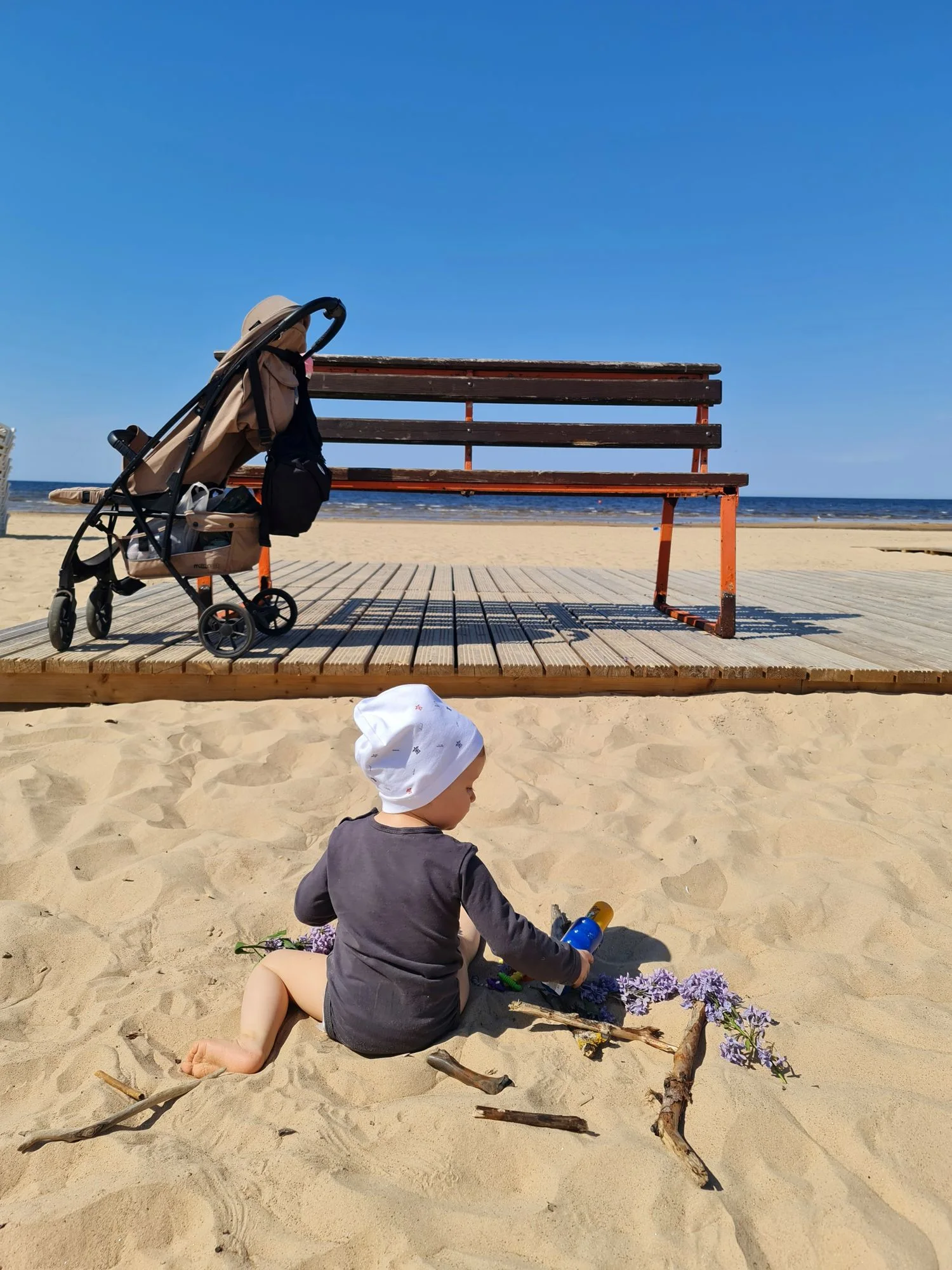
A beach visit with a toddler does not have to become an all-day project. A short, easily reached period in the sand may fit the family rhythm better than a lengthy stay with several bags. The important points are a straightforward return and adults who are not juggling too many tasks at once.
Keep the first visit small
Choose an entrance close to the accommodation or a dependable way home. Check where you can change clothing and how far away the nearest open toilet is. Playing in sand does not require a position immediately beside the water. Keep clear of rescue routes, sporting areas and groups needing a large space.
A few toys, a drink, suitable sun protection, spare clothing and a way to separate wet items are enough to begin with. A familiar spade may be more useful than a whole collection of new moulds. Pack things so that they can be gathered without lengthy sorting. A tired child is unlikely to enjoy waiting while scattered pieces are searched for in the sand.
Hand supervision over explicitly
Non-swimmers need supervision within arm’s reach, even with flotation aids. Beside the water, make it clear which adult is watching the child. Assuming that everyone is vaguely keeping an eye out is unreliable. Anyone taking photographs, preparing food or leaving for the toilet should explicitly hand responsibility to another suitable adult. Lifeguards and swimming aids do not replace supervision by the accompanying adults.
Assess bathing conditions using local notices and flags. It is entirely reasonable to spend the first short visit playing only on dry sand. Seeing the sea does not create an obligation to enter it. If wind, cold or tiredness become significant, begin the return before the outing becomes difficult for everybody.
A recognisable ending can help: count the toys, change clothes and take one last look at the water. This is more concrete than abruptly announcing that it is time to leave. Avoid placing an appointment immediately afterwards, where every small delay becomes a problem. On the next visit, decide whether a longer stay would suit the family. Duration should follow the child and the conditions, not the time other families spend on their blankets.