A distance target says little about whether a family cycle ride will be enjoyable. Wind, surfaces, traffic and pauses all change the effort involved. A well-chosen turning point is more useful: it establishes when the journey home begins without requiring a particular number on a display.
Do not make the outward ride a performance test
Choose a route everyone can already ride confidently. A signed cycle route may still contain road crossings, narrow sections and changing surfaces. Read the description and inspect the alignment. For a first outing, a clear section with limited conflict between walkers and riders is more helpful than using a famous long-distance route at any cost.
The turning point should be recognisable and reachable, perhaps a public rest area or an easily identified edge of a village. An ice-cream shop can be a pleasant destination, but should not be the only incentive if opening is uncertain. Carry drinks and a small snack so that the return does not depend on finding an open door.
Consider wind in both directions
A tailwind on the outward leg can make the group feel more capable than it will on the way back. Consider how the wind changes relative to your direction when you turn. If riders are already struggling early on, turn sooner. A break does not automatically transform an overlong route into a suitable ride.
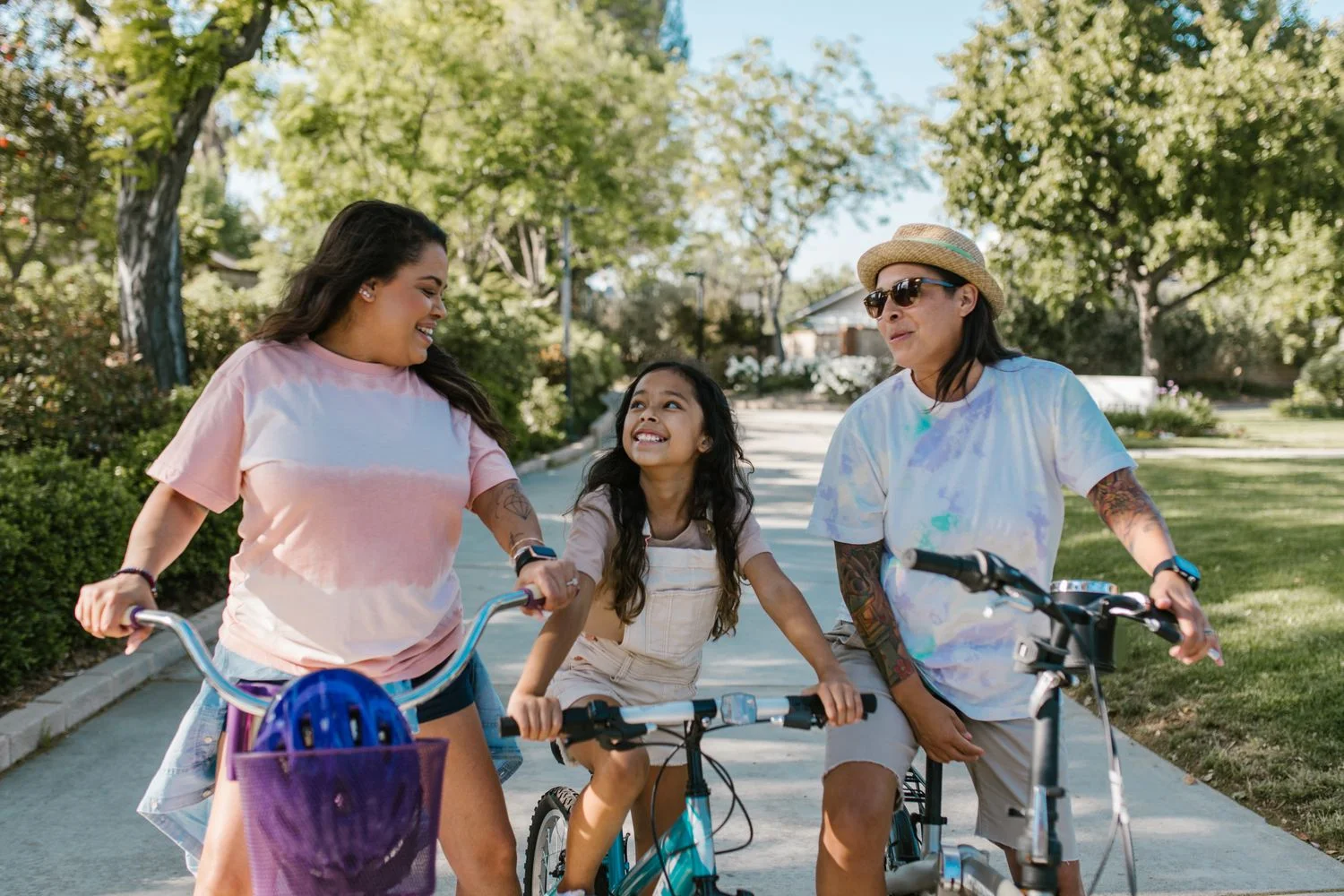
Discuss spacing, stopping and road crossings before setting off. A child should know where to wait rather than riding ahead at every junction. Adults should arrange themselves so the group remains together and younger riders are not pressured to keep an unsuitable pace. The exact approach must fit ages, abilities and traffic rules.
After returning, briefly note what worked. Perhaps the route was pleasant but the break came too late; perhaps the distance suited everyone but a headwind made the final section hard. These observations are more useful for the next outing than comparing kilometres. A shorter ride that leaves energy for the rest of the day is a good foundation for future family trips and gives children a reason to look forward to getting on their bicycles again.
Use a simple observation at the first pause: do not ask only whether everyone wants to continue. Also consider whether riding the same distance back now would still feel comfortable. Children may eagerly agree to the next destination without accounting for the return. An earlier turning point can be paired with an interesting break rather than presented as a failed ride. If the group is already spreading out, do not wait until the distant endpoint to regroup. Stop somewhere suitable and adjust the pace or route. Afterwards, note which surfaces worked, where a road crossing was awkward and which pause genuinely restored energy. This creates a family route that can be repeated or gradually extended on another day.