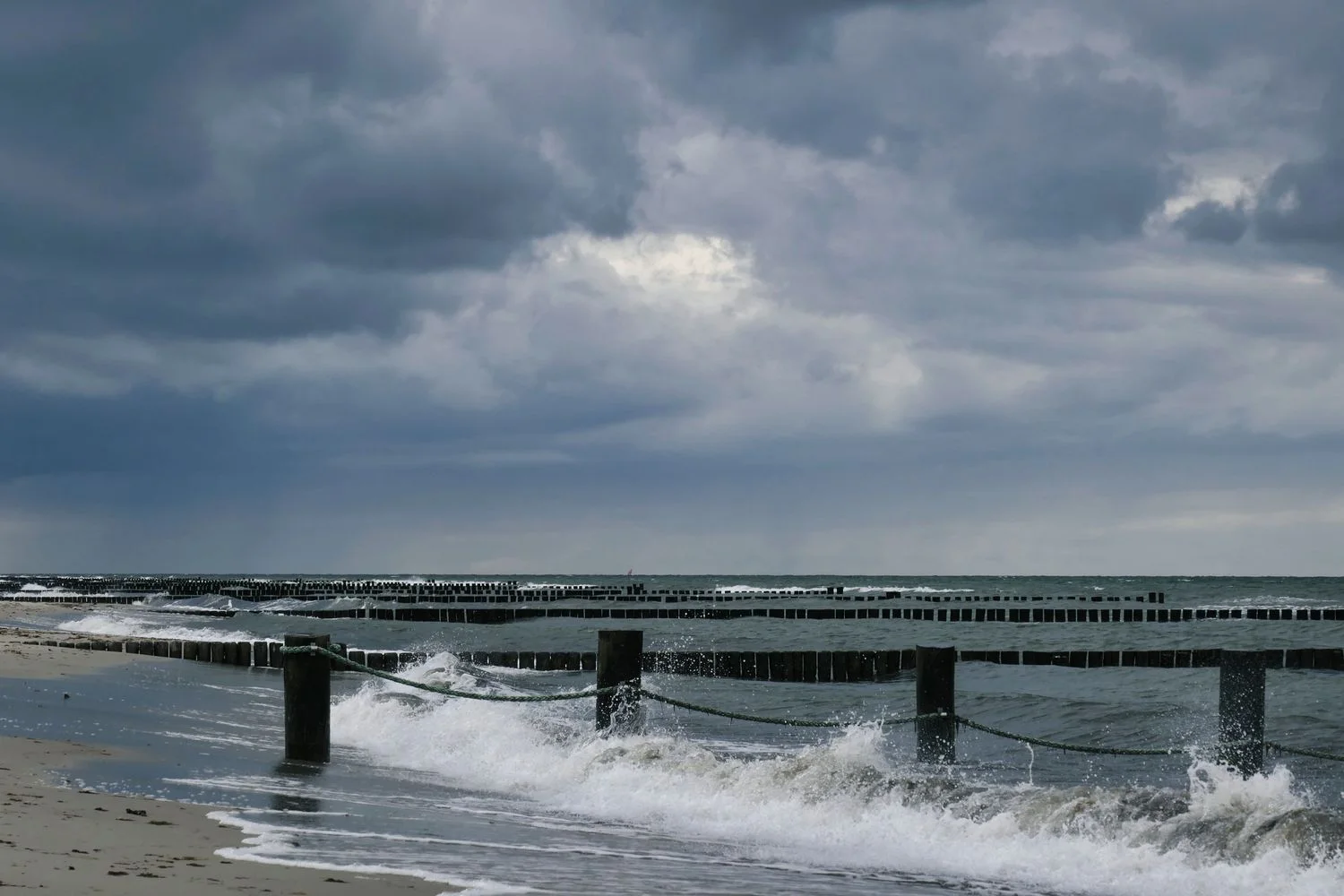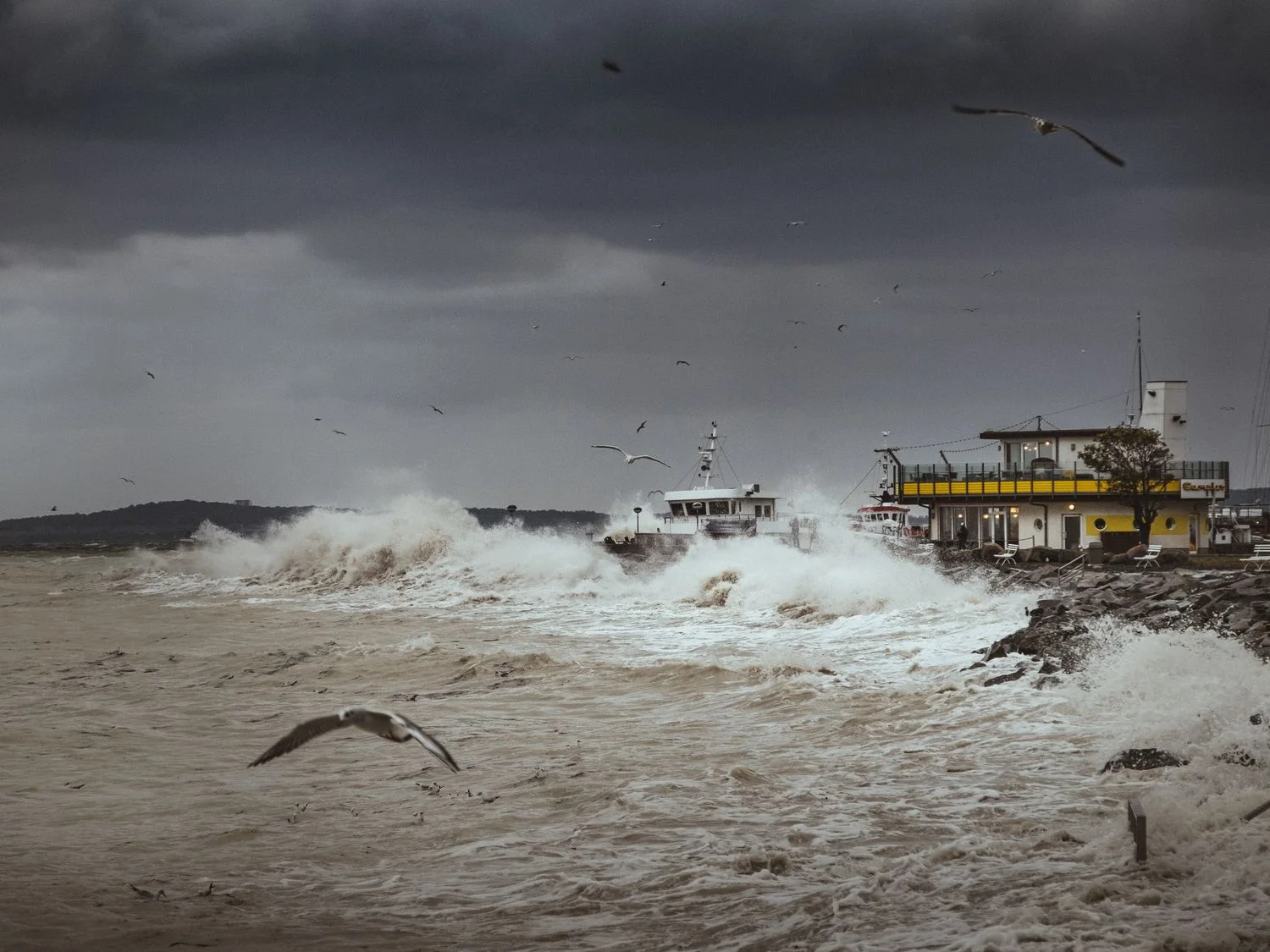
After a storm, the sky may look inviting while the beach has changed considerably. A familiar entry can be scoured out, floating debris may remain and an access route might be closed. Deciding whether to swim again requires a fresh assessment rather than relying on how the shore looked on your last visit.
Start with local information
Read notices from the municipality and the responsible bathing-water information service. Respect barriers at the entrance. A damaged staircase or undermined path does not become a suitable route through careful balancing. Use another officially open section where appropriate or postpone the swim.
At supervised beaches, pay attention to the flags actually displayed. Red means do not bathe or swim. An additional yellow flag indicates dangerous conditions; children and inexperienced swimmers should stay out. Red and yellow identifies the supervised bathing area, but it is not a guarantee that every person can swim in every circumstance. Ask the lifeguards if you are unsure.
Look at the entry again
Storms can move sand and expose objects previously covered. Do not assume a familiar point still has the same depth or bottom surface. Avoid jumping from stones, jetties or other unfamiliar positions. Visible currents, strong breaking waves or debris are reasons to change the plan, not challenges to overcome with extra determination.
Water quality cannot be assessed from colour or smell alone either. Where a warning or bathing prohibition applies, follow the official information. A clear-looking surface does not replace a lifted warning. Conversely, washed-up plant material alone is not enough to establish the hygienic condition of the water.
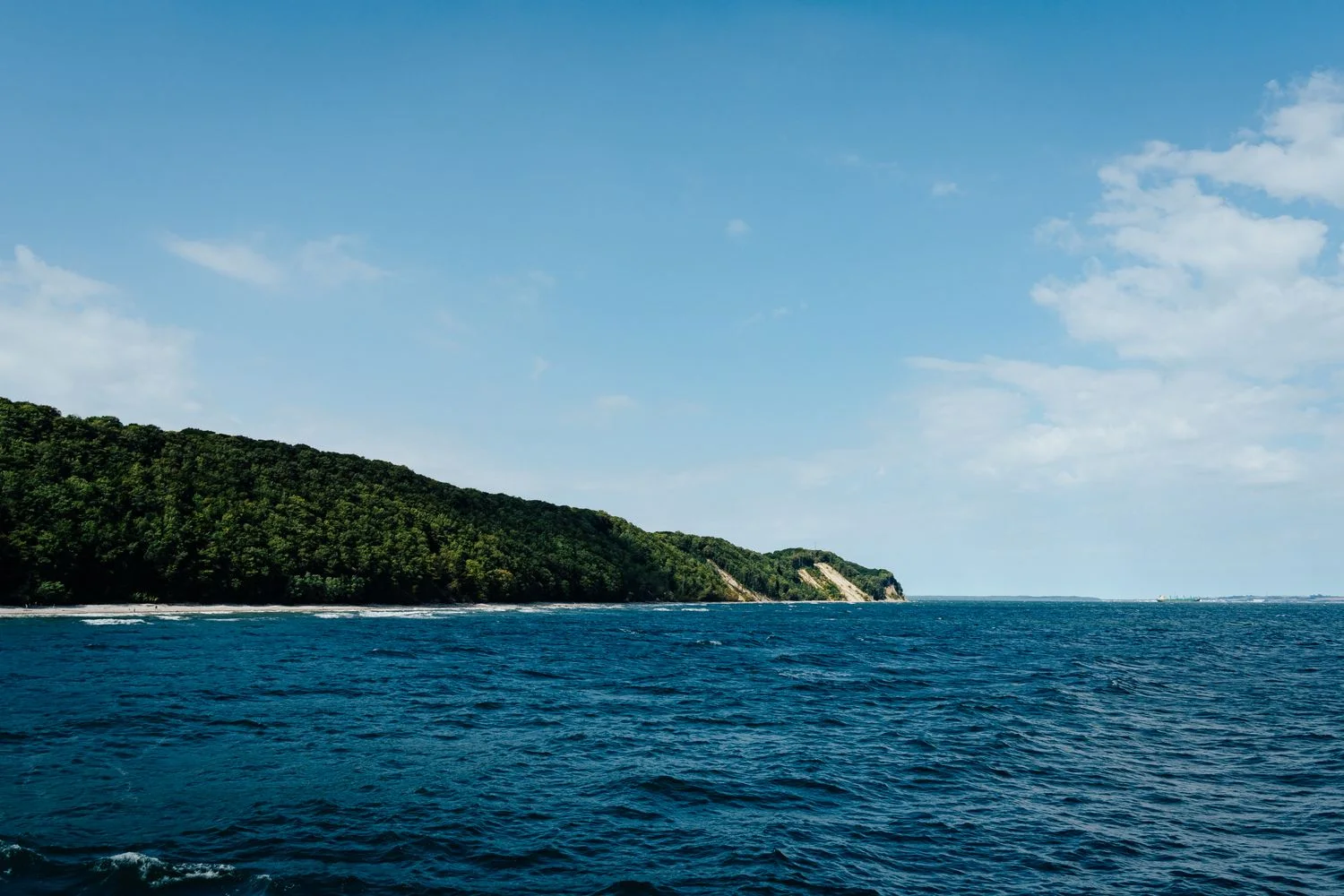
For families, a replacement activity near the promenade can keep the day enjoyable: a short walk on open paths, an open museum or a break overlooking the sea. Avoid woodland affected by strong wind where damaged branches may remain, and keep away from coastal cliffs. If the situation cannot be assessed clearly, leave the swimwear dry. This is a response to changed conditions rather than a missed opportunity that must be recovered. A later visit brings another set of circumstances to check locally. Keeping the programme flexible means the decision does not depend on having promised everybody a swim before reaching the beach.