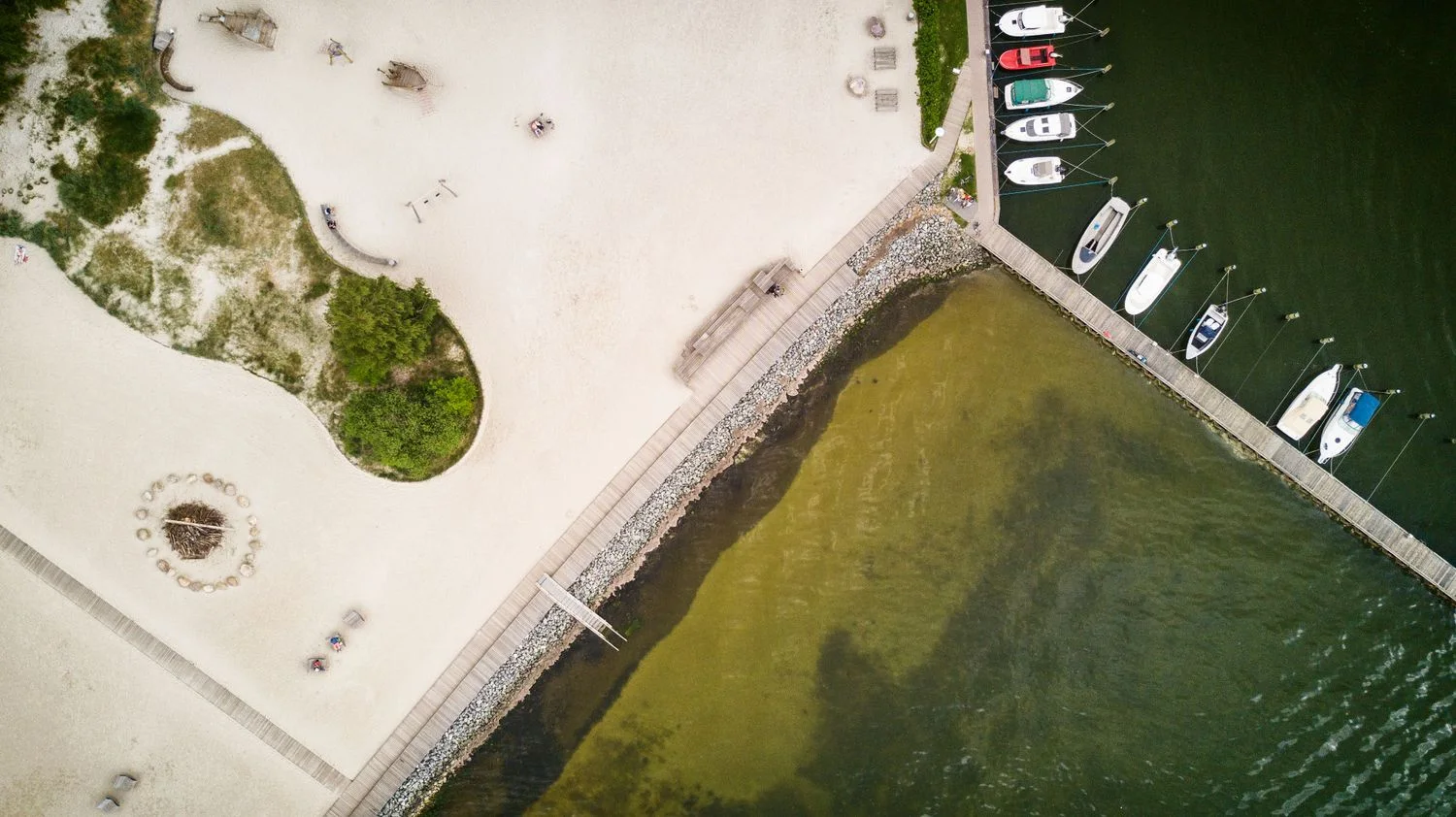
A small harbour is often enjoyable on foot when visitor areas and working space are kept distinct. Boats, ropes, storage and deliveries belong to everyday life there. Much of the interest comes from observing that activity at an appropriate distance rather than treating every pontoon as a public attraction.
Begin on the public waterfront
Find a signed walking area or clearly public route. Respect gates and notices at pontoons. An open gate does not automatically provide access to berths. Avoid places where vehicles manoeuvre, nets are stored or goods are unloaded. If a connection is not clearly public, ask or remain on the known path.
Start with an overview: where is the entrance, which boats are stationary and where are people working? Then choose a quiet position from which the activity can be watched. There is no need to reach every corner. Spending a few minutes in one place often makes the harbour easier to understand than moving immediately to the next jetty.
Keep movement and water in view
Ropes, bollards and uneven surfaces may interrupt walking routes. Avoid looking continuously through the camera. Keep back from the edge, particularly when the ground is wet. With children, establish boundaries and a responsible accompanying adult. Rescue rings and ladders are not play equipment. A harbour basin is not an alternative to a designated bathing area.
When boats arrive or depart, stay outside working zones and follow local instructions. Ropes may be under tension; do not touch or step across them to reach a supposedly better viewing position. Pushchair and wheelchair users should check surfaces and narrow points beforehand. A level promenade says nothing about adjacent pontoons.
Choose a break that fits the place
If a café or snack stop forms part of the visit, check opening and seating. Fish sold at a harbour does not automatically mean a restaurant operates there every day. A public bench may suit a drink brought with you where that use is intended. Take rubbish away rather than leaving it among harbour structures or beside the water.
Photograph considerately around people working or living aboard boats. Ask before close portraits and respect private interiors. A worthwhile harbour visit may consist of a short circuit, a few observations and a pause. It needs neither a special event nor entry into restricted areas to reveal the relationship between a coastal town and its water.